• The Succession Crisis: Who Will Lead Iran in 2026?

    The Succession Crisis: Who Will Lead Iran in 2026?

    What if you woke up tomorrow and the entire geopolitical map of the Middle East had shifted overnight? It sounds like the plot of a high-stakes political thriller, but for anyone following the news lately, the “Operation in Iran” has turned that fiction into a very intense reality.
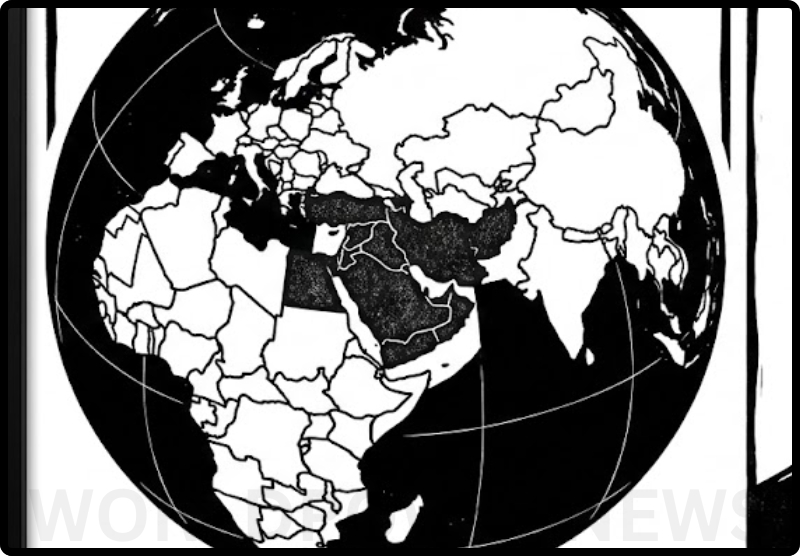
    With the recent news confirming the death of Ayatollah Ali Khamenei following joint U.S. and Israeli strikes, the world is holding its breath. We aren’t just looking at a change in the news cycle; we are looking at the potential end of an era that has lasted nearly half a century. Naturally, the biggest question on everyone’s mind is: who will come to power after Ayatollah?

    Let’s break it down, because the answer isn’t as simple as a standard line of succession. In a country where power is shared between clerics, the military, and shadowy committees, the “after” is looking a bit like a crowded chessboard.

    The Top Three Supreme Leadership.

    Ever since the news broke about the recent strikes and the vacuum left behind, the question of who will come to power after Ayatollah has moved from a “what if” scenario to an urgent reality. It’s like a high-stakes game of musical chairs, but the chairs are in a fortified room in Tehran.

    The competition is fierce because, for the first time in decades, there isn’t a clear “heir apparent.” Let’s look at the three biggest names currently in the mix.

    1. Alireza Arafi: The Institutional Insider.
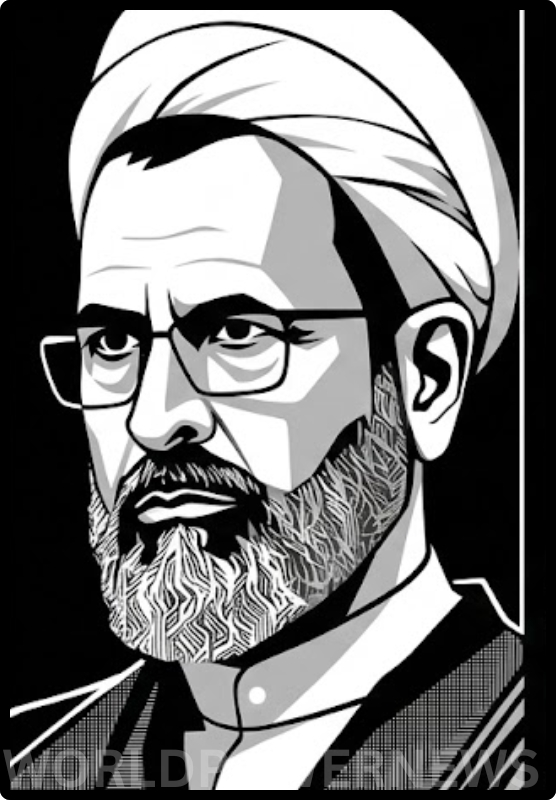
    If you’re looking for the person who currently has their hand on the steering wheel, it’s Alireza Arafi. Right now, he is essentially the “acting” face of the regime as part of the Interim Leadership Council.

    Arafi is a 67-year-old high-ranking cleric who has spent his life climbing the ranks of Iran’s religious bureaucracy. He isn’t just a priest; he’s an administrator. He’s headed the country’s entire seminary system and sits on the Guardian Council. For those within the regime who are terrified of total collapse, Arafi is the “safety” pick. He represents continuity and knows the system’s plumbing better than anyone. He’s a hardliner, for sure, but he’s viewed as a stable pair of hands.

    2. Mojtaba Khamenei: The Shadow Prince.
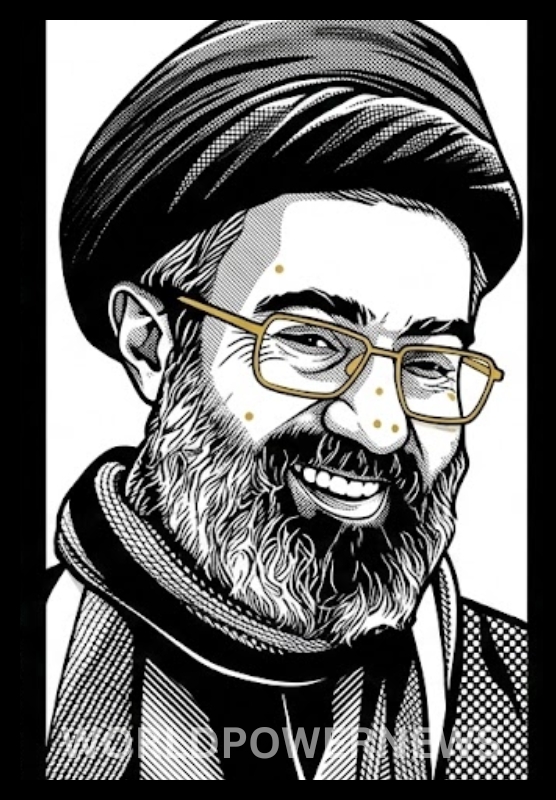
    Then there’s the wildcard: Mojtaba Khamenei, the son of the late leader. For years, he’s been the man behind the curtain. While he doesn’t hold an official government title, his influence over the military capabilities of Iran—specifically the IRGC and the Basij militia—is legendary.

    The big question with Mojtaba is whether the public (and other clerics) will accept a dynastic succession. The 1979 Revolution was all about getting rid of a monarchy, so making the son the new leader feels a bit “King-like” for a republic. However, Mojtaba has the backing of the security forces, and in the aftermath of Iran regime instability, the military might decide that “the son we know” is better than a cleric we don’t.

    3. Gholam-Hossein Mohseni-Eje’i: The Enforcer.
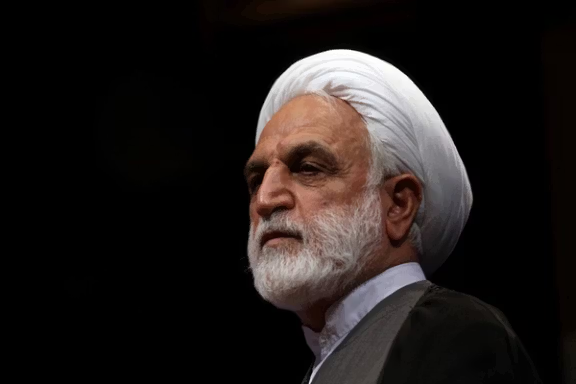
    image source: i.iranintl.com

    If the regime feels it needs to double down on internal security to survive the current chaos, they might look to Mohseni-Eje’i. As the current Chief Justice and a former Intelligence Minister, he is the ultimate “law and order” candidate.

    He is a polarizing figure, known for his role in crushing previous protests. Within the inner circle, he’s seen as someone who won’t flinch when things get tough. If the Assembly of Experts decides that the top priority is preventing a revolution from within, Eje’i’s background in intelligence and the judiciary makes him a formidable contender for the top spot.

    What do you think? Is Iran more likely to choose a “administrator” like Arafi, or will the “shadow power” of Mojtaba Khamenei take center stage?

    The Immediate Power Vacuum.

    In the short term, Iran isn’t actually “leaderless.” Their constitution has a built-in “break glass in case of emergency” plan. Right now, a temporary group called the Interim Leadership Council has stepped in. It’s made up of people you might not know by name, like President Masoud Pezeshkian and Chief Justice Gholam-Hossein Mohseni.

    Think of them as the “designated drivers” of the state while the real decision-makers—an 88-member group of clerics called the Assembly of Experts—scramble to find a permanent replacement. But here’s the kicker: finding someone who can fill those shoes and keep the different factions from fighting each other is a monumental task.

    Did you know that Khamenei’s own son, Mojtaba Khamenei, has been whispered about for years? However, the idea of a father-to-son handoff is a bit awkward for a regime that originally came to power by overthrowing a monarchy. It would be a tough sell to a public that is already out in the streets demanding change.

    The Military Factor.
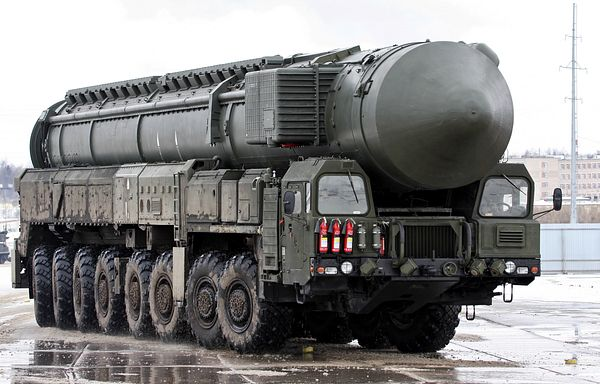
    image source: thediplomat.com

    While the clerics are debating in Qom, we have to talk about the real muscle: the Islamic Revolutionary Guard Corps (IRGC). This is where the military capabilities of Iran come into play. The IRGC isn’t just a branch of the army; they are a massive business empire and a secondary government rolled into one.

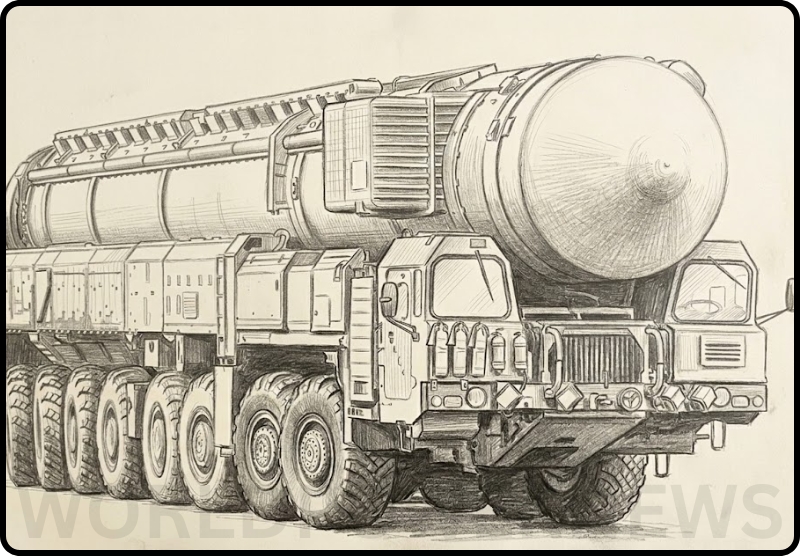
    Even with the recent strikes degrading their command centers, the IRGC remains the lynchpin of the regime’s survival. They have spent decades building a “decentralized” system. This means that even if the head is cut off, the arms can still swing. Their arsenal of ballistic missiles and “low-cost, high-impact” drones are designed to be launched from mobile sites that are hard to hit all at once.

    What do you think happens if the clerics can’t agree on a leader? Many analysts believe the IRGC might just stop waiting for a priest to tell them what to do. We could see a shift where Iran looks less like a theocracy and more like a military junta. In that scenario, the “Supreme Leader” might just become a figurehead while the generals call the shots.

    The Aftermath of Iran Regime.

    If the current system actually collapses under the weight of these operations, we enter the most unpredictable phase: the aftermath of Iran regime. This is the part that keeps diplomats up at night. On one hand, you have millions of young Iranians who are desperate for a normal life, a better economy, and more freedom. You’ve likely seen the videos of celebrations in the streets—that’s a real, powerful hunger for change.

    But on the other hand, a sudden collapse can be messy. When a central power disappears, it often leaves a “power vacuum” that can lead to internal chaos. There’s a risk of different provinces or ethnic groups trying to pull away, or even worse, a civil struggle between regime die-hards and the general population.+1

    The global impact is already being felt at the gas pump. Iran’s move to restrict the Strait of Hormuz—where about 20% of the world’s oil flows—has sent energy prices on a rollercoaster. It’s a classic move from their playbook: “If we go down, we’re taking the global economy’s stability with us.”+1

    What Lies Ahead?

    So, where does this leave us? We are essentially watching a 45-year-old engine try to stay running while several of its key parts have been removed. Whether a moderate like Hassan Khomeini (the grandson of the original Ayatollah) can bridge the gap, or if a hardline cleric like Alireza Arafi takes the reins, the Iran of next year will look nothing like the Iran of last year.

    It’s a moment of both immense hope and significant danger. The “Operation in Iran” wasn’t just a military strike; it was a catalyst for a total transformation of the region. We are witnessing history in real-time, and while the path forward is blurry, the old status quo is definitely gone for good.

    What do you think is the most likely outcome—a new face for the old system, or a total transformation led by the people?
  • Can New Zealand Be a State of Australia..!

    Can New Zealand Be a State of Australia..!

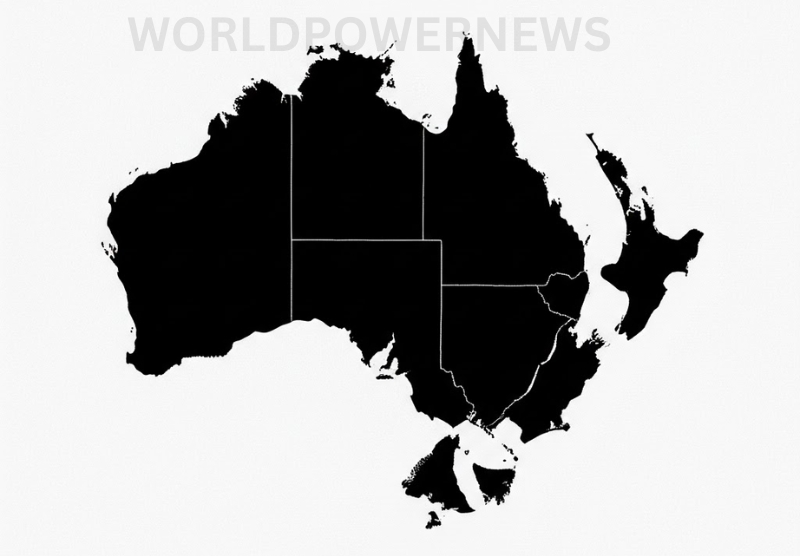
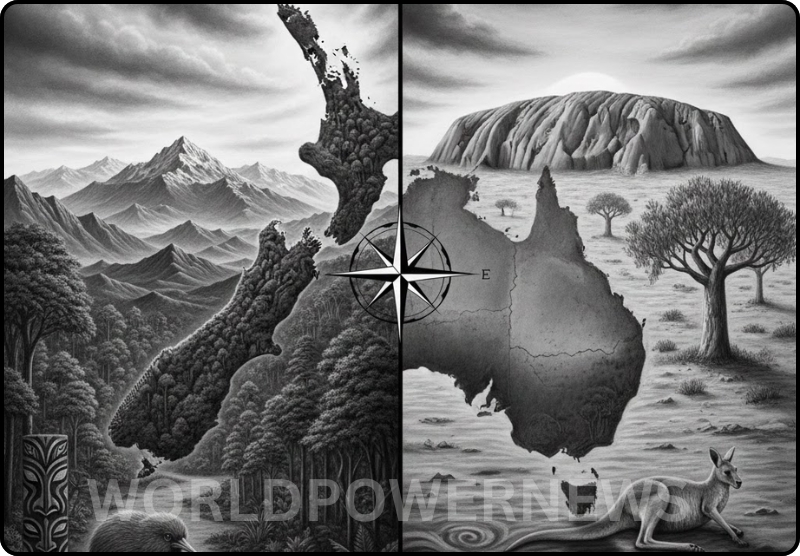
    Did you know that the Australian Constitution actually has a “saved seat” at the table specifically for New Zealand? It sounds like something out of a quirky alternate history novel, but it is 100% true. When the different colonies in this part of the world were chatting about teaming up back in the late 1800s, New Zealand was right there in the mix, and the door was left wide open for them to join the party whenever they felt like it.

    What if you could hop on a flight from Auckland to Sydney and treat it just like a domestic trip to Wellington, with no passports, no different currencies, and absolutely zero fuss? It is a wild thought that pops up every few years whenever the economy gets a bit bumpy or a rugby match gets particularly heated. People start whispering and wondering: is it time for New Zealand to become a part of Australia, or is the “sibling rivalry” just too deep to ever share a bank account?

    Such Good Mates.

    Let’s break it down and look at how this whole “Australasia” mega-country would actually work. To understand the vibe, you have to realize that these two countries are already closer than almost any other two nations on the planet. We have the Trans-Tasman Travel Arrangement, which basically means Aussies and Kiwis can live and work in each other’s backyards indefinitely. It is a pretty sweet deal that most of the world looks at with a bit of envy.

    So, if we are already such good mates, why even bother making it official? Well, a lot of people point toward the sheer scale of the economy.

    what are the advantages of New Zealand becoming a part of Australia,

    the biggest one is usually the “bigness” of it all. Australia is a massive player on the global stage with huge mineral wealth and a much larger population, while New Zealand is a smaller, more nimble island nation that often punches above its weight but struggles with the high costs of being isolated.

    Imagine the sheer power of a combined economy where the New Zealand dollar disappears and everyone uses the Aussie dollar. It would simplify trade instantly. Businesses wouldn’t have to worry about exchange rates shifting overnight, and the cost of shipping goods across the “ditch” would likely drop. Plus, Kiwi workers might see a significant bump in their paychecks, as Australian wages tend to be higher across several sectors like healthcare, construction, and mining.

    There is also the matter of defense and international clout. Instead of two separate, smaller voices in the Pacific, a unified nation would be a powerhouse. We’d be a top-tier global economy with a military and diplomatic presence that would be impossible to ignore. For a lot of people living in the smaller towns of New Zealand, the idea of having access to the massive infrastructure projects and the deep pockets of the Australian federal government sounds like a dream come true for their local roads and hospitals.

    Together New Zealand and Australia can be economy giant in the world and New Zealand automatically overtake South Korean economy and larger than the Spain economy.

    population level, New Zealand is at the moment world 122nd place but together with Australia it would be 47 place in the world.

    But before we get too carried away with the idea of a giant Southern Cross flag, we have to talk about the flip side. If you ask a local in Christchurch or Dunedin, they might have a very long list regarding some matters.

    what are the disadvantages of New Zealand becoming a part of Australia.

    The most obvious one is the loss of identity. New Zealand has a very specific, unique culture that is deeply intertwined with Māori heritage and the Treaty of Waitangi, which is the founding document of the nation.

    Australia has its own complex history and a different approach to its Indigenous populations. Many people fear that if New Zealand became the seventh or eighth state of Australia, that unique Kiwi voice would just get drowned out by the much larger populations of New South Wales and Victoria. New Zealanders pride themselves on being a bit more socially progressive in certain areas, and there is a genuine worry that they would lose their ability to set their own rules on things like environmental protection or nuclear-free zones.

    Then there is the simple matter of distance. While they look close on a global map, there are about 2,000 kilometers of rough ocean between them. Managing a country from Canberra when some of your citizens are a three-hour flight away in another time zone creates some pretty massive logistical headaches. Would a government in a far-off Australian capital really care about the specific needs of a small sheep farmer in Southland? It is a valid concern that keeps many Kiwis firmly in the “no” camp.

    Sports Side.

    What do you think about the sports side of things? This might sound trivial, but in this part of the world, sport is basically a religion. Could you ever imagine a world where the All Blacks and the Wallabies are the same team? The rivalry is what makes the games worth watching! If the two countries merged, we would lose one of the greatest sporting spectacles in history. It sounds funny, but cultural pride often hinges on these “us vs. them” moments that define who we are.

    When we ask ourselves if is it time for New Zealand to become a part of Australia, we also have to look at the political reality. Right now, New Zealand is a sovereign nation with its own seat at the United Nations and its own independent foreign policy. Giving that up is a huge deal. It means New Zealand wouldn’t be able to take a stand on global issues without checking in with the rest of the Australian states first. For a country that prides itself on being an independent “can-do” nation, that feels like a lot to sacrifice for a slightly stronger currency.

    Tax System.

    There is also the “tax and spend” argument. Australia has a very different tax system, including a capital gains tax that New Zealand currently doesn’t have in the same way. Navigating the merger of two entirely different legal, education, and healthcare systems would be a bureaucratic nightmare that could take decades to untangle. Think about every single law, from how fast you can drive to how you buy a house, needing to be synchronized across the Tasman Sea.

    On the flip side, some argue that the “brain drain” — where young Kiwis head to Australia for better pay — would actually stop being an issue because the two would be one. Instead of losing talent to a “foreign” country, the talent would just be moving within the same borders. This could lead to a more vibrant, unified labor market where people can follow the best opportunities without feeling like they are abandoning their homeland.

    What is the most likely outcome, though? Most experts seem to think that while a full political merger is probably a bridge too far, we will continue to see the two countries get closer and closer. We might see things like a common currency or even more integrated border controls without actually becoming one single country. It’s like being the best of friends who live in separate houses but have a gate in the fence so they can share the lawnmower and have dinner together every night.

    The Bond Between Two Countries.

    At the end of the day, the bond between Australia and New Zealand is one of the strongest in the world. Whether they are one country or two, they will always be “Anzacs” who have each other’s backs in times of trouble. The debate about joining forces is really a debate about what we value more: the power and stability of a larger union, or the precious, independent spirit of a small island nation that loves to do things its own way.

    It is a fascinating “what if” that tells us a lot about how we see ourselves and our neighbors. Even if the paperwork never gets signed and the maps never change, the conversation alone helps us appreciate just how lucky these two countries are to have each other right across the water.

    Do you think the world is moving toward bigger “super-states,” or will the desire for local identity always win out in the end? Would you be willing to trade a bit of national pride for a more powerful passport and a stronger economy?

  • What is Business? A Simple Guide to the Engine of Our World

    What is Business? A Simple Guide to the Engine of Our World

    The Simple Logic of Commerce: What is Business at its Core?

    What is Business? Did you know that the massive, complex world of global commerce actually boils down to the same simple logic as a kid trading a shiny marble for a cool sticker on a playground? It sounds almost too simple to be true, but at its heart, that is exactly what business is.

    We often get intimidated by big words like “corporations” or “infrastructure,” but if we strip all that away, we are just talking about people helping other people get what they need or want. It is a giant, never-ending conversation where everyone is trying to find a way to make life a little bit better, easier, or more fun for someone else.

    The Bridge Between Problem and Solution

    What is a business, really, when you get right down to the brass tacks? Think of it as a bridge. On one side, you have a person with a problem or a desire; on the other side, you have a solution. The business is the vehicle that carries that solution across the bridge.

    Whether you are talking about a massive tech company building software or your neighbor baking sourdough bread, the core mechanic is identical: They have identified something that is missing in the world and decided to be the ones to provide it.

    The Core Cycle: How to Buy and Sell for Profit

    The engine that keeps this whole machine running is the simple act to buy and sell. This is the heartbeat of every economy on the planet.

    When you walk into a coffee shop, you are participating in an age-old dance:

    • The Buyer: Has money (representing time and effort).
    • The Seller: Has a product (a delicious latte).
    • The Exchange: You decide the latte is more valuable than your five dollars; the owner decides the five dollars is more valuable than the milk and beans.

    It is a mutual agreement where both sides walk away feeling like they won.

    how to earn money

    How to Earn Money by Creating Real Value

    Let’s break it down further. If you are looking at how to start your own journey, you are essentially looking for a way to create value. People often ask how to earn money in a way that feels sustainable and rewarding, and the answer is almost always rooted in solving a problem.

    If you can make someone’s day easier, or provide a product that saves them time, they will happily exchange their hard-earned cash for that benefit. It isn’t about “taking” money; it’s about providing so much value that people are excited to give it to you.

    Understanding Profit as a Vital Sign

    When we talk about how to earn money, we must discuss “profit.” Profit isn’t greedy; in a healthy business, profit is the applause you get for a job well done. It is the fuel that allows you to:

    1. Keep going and stay operational.
    2. Hire more people.
    3. Create even better products.

    How to Get Advice to Improve the Business

    What is the most important part of keeping that engine running? It isn’t just the first sale—it’s growth. When you are wondering how you get advice to improve the business, the best place to look is at the people you serve.

    Your customers are the ultimate guidebooks. They will tell you through their feedback and even their complaints exactly what you need to do to get better.

    • Listen More than You Talk: The most successful entrepreneurs listen to the market and their employees.
    • Seek Mentorship: Look toward those who have walked the path before you. There is no shame in asking for a map in unexplored territory.

    A Historical Perspective: Business Lessons from Locke and Smith

    If we were to invite John Locke and Adam Smith to a modern coffee house to discuss the nature of “Business,” they would see it as the practical application of social utility.

    • John Locke (The Foundation of Property): Locke would argue that business begins with the individual. When you mix your labor with raw materials, you create property. Business is the organized mechanism of this transformation.
    • Adam Smith (The Invisible Hand): Smith would call business the engine of human progress. Through the Division of Labor, businesses increase productivity and lower costs, making life better for the common man.

    Key Takeaways: How to Earn Money as an Entrepreneur

    • Start Small: You don’t need a thousand customers; you just need one.
    • Stay Curious: Most businesses fail because the owner stopped learning.
    • Focus on Heart: Like a local bookstore, compete on experience and community, not just price.
  • The 2026 Crisis of Suez Canal: Why Global Trade is at a Crossroads

    The 2026 Crisis of Suez Canal: Why Global Trade is at a Crossroads

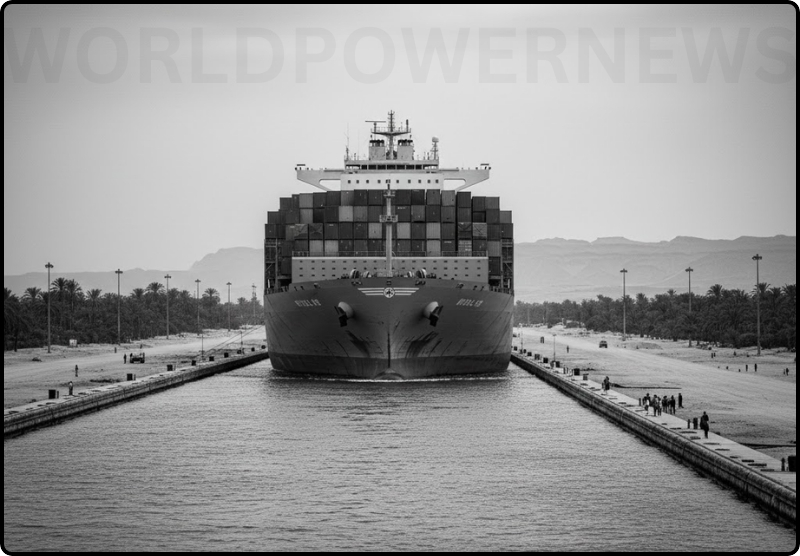
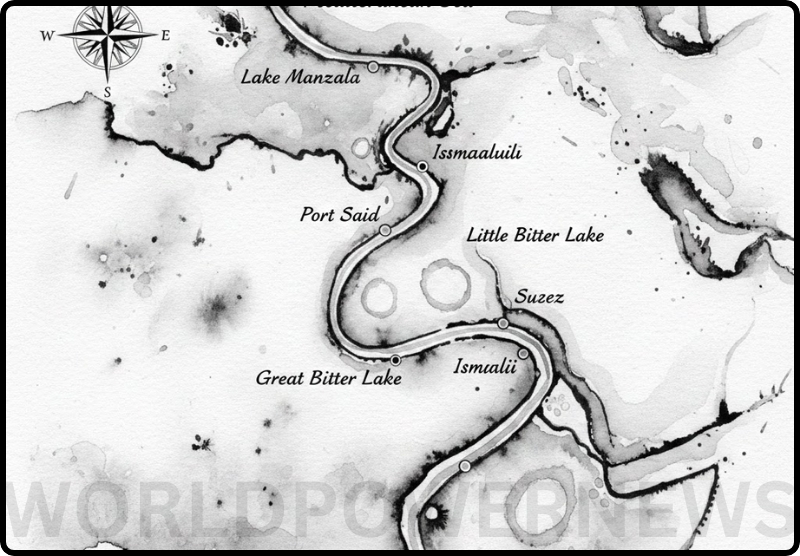
    Did you know that about 12% of everything the entire world buys, sells, or builds travels through a single thin strip of water in the Egyptian desert? It’s a bit mind-blowing when you think about it. If that one narrow path gets blocked or becomes too risky to use, the cost of your morning coffee or that new smartphone could suddenly start creeping up.

    Suez canal

    That’s exactly why the current situation of Suez canal is making so many headlines lately. For those of us just watching from the sidelines, it can feel like a complicated mess of global politics and shipping routes. But if we peel back the layers, it’s actually a fascinating story about how the world stays connected and what happens when those connections get frayed.

    Understanding the History Behind the Crisis of Suez Canal

    Before we look at the headlines of today, we have to talk about the History of Suez Canal to understand why it’s such a big deal. Back in 1869, when it first opened, it was basically the 19th-century version of a teleportation device. Suddenly, ships didn’t have to sail all the way around the bottom of Africa to get from Europe to Asia. It chopped weeks off the journey.

    But because it was so useful, everyone wanted a piece of it. You might remember hearing about the 1956 Suez Crisis in history class. That was a huge moment where Egypt’s president decided to nationalize the canal, leading to a brief but intense conflict involving Britain, France, and Israel. It wasn’t just a local spat; it was a global showdown that changed how the world viewed international trade and power.

    The canal has always been more than just a shortcut; it’s a pulse point for the global economy. Every time it closes—like it did for eight years after the 1967 war—the world feels the pinch. It’s like a main artery in the body of global commerce. When it’s flowing, everything is healthy; when it’s not, things start to get uncomfortable very quickly.

    Current Status: Navigating the Crisis of Suez Canal in 2026

    So, what is the current situation of Suez canal as we navigate through 2026? If you’ve been following the news over the last couple of years, you know it’s been a bit of a rollercoaster. For a while there, things were pretty quiet, but then tensions in the Red Sea started flaring up.

    Because of security risks near the entrance of the canal, many of those massive container ships—the ones that look like floating skyscrapers—started taking the “long way” again. They began sailing around the Cape of Good Hope in Africa, just like they did 150 years ago. Can you imagine the extra fuel and time that takes? It adds about 10 to 14 days to a trip.

    As of early 2026, we’re seeing a bit of a “cautious return.” Some of the big shipping giants, like Maersk and CMA CGM, are starting to test the waters again with specific vessels under naval protection. But it’s definitely not “business as usual” yet. Traffic is still lower than its peak, and insurance costs for these ships are through the roof. It’s a bit like driving through a construction zone; you can get through, but you’re going slow and looking over your shoulder.

    Economic and Geopolitical Impacts of the Shipping Crisis

    You might be wondering, How would effect Suez Canal under new geopolitical situation move the needle for us? Let’s break it down. We aren’t just talking about a few ships being late. When the canal is under pressure, it creates a domino effect.

    First, there’s the cost. When ships take longer routes or pay higher insurance, that cost eventually lands on our doorstep. If it costs more to ship a container of sneakers, the price of those sneakers in the store goes up. It’s a very practical example of how a conflict thousands of miles away can hit your wallet.

    Then there’s the “green” factor. Sailing all the way around Africa burns a massive amount of extra fuel. In a world trying to cut down on carbon emissions, these detours are a significant step backward. The Suez Canal is actually the most eco-friendly route for East-West trade because it’s the shortest. Keeping it safe is actually a win for the planet, too.

    What do you think about the idea of “fragile” supply chains? The last few years have shown us that our global system is a bit like a house of cards. One disruption in a place like the Suez Canal, and the whole thing starts to wobble. It’s forcing countries and companies to think about building “backups”like new rail lines across Asia or even moving factories closer to home.

  • The Psycho Analysis of Jacques Lacan..!

    The Psycho Analysis of Jacques Lacan..!

    Did you know that the secret to why we keep buying things we don’t need might actually be hidden in the complex theories of a French psychoanalyst and a German philosopher?

    image of 
Jacques Lacan

    What if I told you that the feeling of “never having enough” isn’t just a personal flaw, but a core feature of the world we live in?

    Today, let’s talk about Jacques Lacan and Karl Marx. It sounds heavy, but it’s actually a fascinating look at how our minds and our money work together.

    The Strange Connection of Jacques Lacan.

    Have you ever wondered why we feel a rush when we buy a new phone, only to feel “meh” about it a week later? Jacques Lacan, a famous psychoanalyst, spent a lot of time thinking about this.

    In the late 1960s,Jacques Lacan started looking closely at Marx’s ideas. Now, Marx is famous for talking about “surplus value”—that extra profit a boss makes from a worker’s hard labor.

    Lacan took that idea and applied it to our feelings. He called it “surplus-jouissance,” which is a fancy way of saying “extra enjoyment” or “extra desire.”

    Is There a Solution?

    What do you think? Can a new government or a better economy make us perfectly happy? Many people who followed Marx and Freud thought so. They believed that if we fixed society and broke down capitalism, we would finally be mentally free and happy.

    But Lacan totally disagreed. He famously said he didn’t have a “solution” to offer. He believed that human desire is naturally “broken” or incomplete.

    In his view, no matter what system we live under—socialism, capitalism, or anything else—we will always feel a sense of “crisis and delay.”

    The Never-Ending Loop

    What is “crisis and delay” exactly? It’s the idea that our satisfaction is always being pushed into the future.

    Think about it: you want a specific pair of shoes. You tell yourself, “If I get those, I’ll be happy.” You buy them, you feel great for an hour, and then… you start wanting something else.

    Lacan says that’s because we aren’t actually looking for the shoes; we are looking for a feeling of “wholeness” that doesn’t actually exist.

    Capitalism is like a pro at using this. It sells us “surplus enjoyment.” It promises that the next purchase will finally make us complete, but it knows it won’t. If we were ever truly satisfied, we’d stop buying things!

    The Trouble with Revolution

    Did you know that Jacques Lacan wasn’t exactly a typical “revolutionary”? During the famous student protests in Paris in 1968, he was actually quite skeptical.

    He told the students that they were acting like “hysterics.” Now, in psychoanalysis, a “hysteric” is someone who challenges the person in power but secretly just wants a better, “new” master to follow.

    He thought the “revolution” was just like a planet orbiting a star—it moves in a circle and ends up right back where it started.

    He feared that instead of destroying capitalism, these protests were just helping capitalism evolve into a new version based on the “market of knowledge.”

    The “Vampire” of Capital

    When we look at Marx through Lacan’s eyes, things get a bit spooky. Marx often used “Gothic” metaphors, describing capital as a “vampire” that sucks the life out of living labor.

    But Jacques Lacan didn’t want us to see this as a simple hero-versus-villain story. He wanted us to see the internal logic of it.

    Capitalism needs workers to create value, but it also needs to take that value away to survive. This creates a huge contradiction.

    This contradiction isn’t just about money; it creates a specific kind of “subject” or person. We become people defined by what we lack.

    The Truth as a “Symptom”

    What is a “political subject” then? To Jacques Lacan and Marx, it’s not just a person with a political opinion.

    Marx saw the “proletariat” (the working class) as a “symptom” of society. A symptom in a doctor’s office tells you something is wrong deep inside the body.

    The working class is the “symptom” of capitalism because their very existence proves that the system’s promise of “freedom and equality for all” is a bit of a lie.

    They represent the truth that the system hides: that for some to be very rich, others must be kept in a state of constant needing.

    The “Magic” of Products

    Have you heard of “commodity fetishism”? It’s a complex term for a simple idea: we treat objects like they have magical powers.

    We look at a designer bag and see “status” or “success” instead of just leather and stitching.

    Capitalism covers up the messy, sometimes painful reality of how things are made with a shiny, positive mask. It makes the world look like a “Gospel” of progress.

    But Jacques Lacan reminds us that underneath that mask is the same old human desire that can never be fully satisfied.

    Why This Still Matters

    So, why does any of this matter today? Well, it helps us understand why changing the world is so hard.

    It’s not just about changing laws or leaders; it’s about understanding the “brokenness” inside our own hearts and minds.

    Lacan’s ideas are a bit of a reality check. They tell us that “perfect mental liberation” is a myth.

    Our imperfections and our constant searching are actually what make us human. Our “incompleteness” is the very thing that keeps us moving, dreaming, and even fighting for change.

    What do you think? Does knowing that your “thirst” for more is a built-in part of being human make you feel more frustrated, or does it actually make you feel a little more at peace with yourself?

    Would you like me to explain more about Lacan’s specific idea of “The Big Other” and how it relates to social media today?

    For more information.

    Tharidu Mendis.