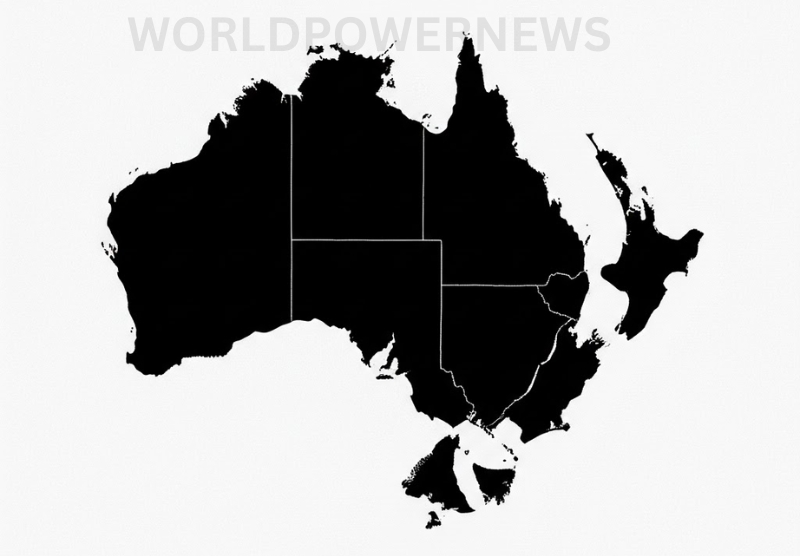
Did you know that the Australian Constitution actually has a “saved seat” at the table specifically for New Zealand? It sounds like something out of a quirky alternate history novel, but it is 100% true. When the different colonies in this part of the world were chatting about teaming up back in the late 1800s, New Zealand was right there in the mix, and the door was left wide open for them to join the party whenever they felt like it.
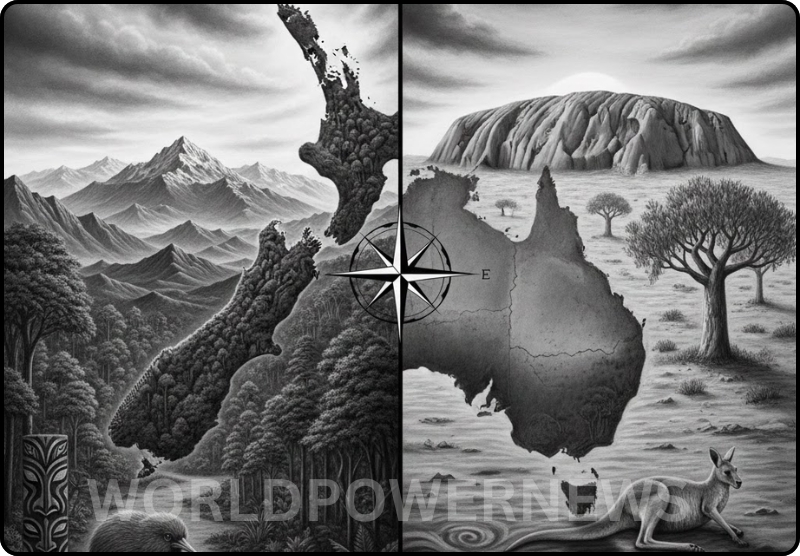
What if you could hop on a flight from Auckland to Sydney and treat it just like a domestic trip to Wellington, with no passports, no different currencies, and absolutely zero fuss? It is a wild thought that pops up every few years whenever the economy gets a bit bumpy or a rugby match gets particularly heated. People start whispering and wondering: is it time for New Zealand to become a part of Australia, or is the “sibling rivalry” just too deep to ever share a bank account?
Such Good Mates.
Let’s break it down and look at how this whole “Australasia” mega-country would actually work. To understand the vibe, you have to realize that these two countries are already closer than almost any other two nations on the planet. We have the Trans-Tasman Travel Arrangement, which basically means Aussies and Kiwis can live and work in each other’s backyards indefinitely. It is a pretty sweet deal that most of the world looks at with a bit of envy.
So, if we are already such good mates, why even bother making it official? Well, a lot of people point toward the sheer scale of the economy.
what are the advantages of New Zealand becoming a part of Australia,
the biggest one is usually the “bigness” of it all. Australia is a massive player on the global stage with huge mineral wealth and a much larger population, while New Zealand is a smaller, more nimble island nation that often punches above its weight but struggles with the high costs of being isolated.
Imagine the sheer power of a combined economy where the New Zealand dollar disappears and everyone uses the Aussie dollar. It would simplify trade instantly. Businesses wouldn’t have to worry about exchange rates shifting overnight, and the cost of shipping goods across the “ditch” would likely drop. Plus, Kiwi workers might see a significant bump in their paychecks, as Australian wages tend to be higher across several sectors like healthcare, construction, and mining.
There is also the matter of defense and international clout. Instead of two separate, smaller voices in the Pacific, a unified nation would be a powerhouse. We’d be a top-tier global economy with a military and diplomatic presence that would be impossible to ignore. For a lot of people living in the smaller towns of New Zealand, the idea of having access to the massive infrastructure projects and the deep pockets of the Australian federal government sounds like a dream come true for their local roads and hospitals.
Together New Zealand and Australia can be economy giant in the world and New Zealand automatically overtake South Korean economy and larger than the Spain economy.
population level, New Zealand is at the moment world 122nd place but together with Australia it would be 47 place in the world.
But before we get too carried away with the idea of a giant Southern Cross flag, we have to talk about the flip side. If you ask a local in Christchurch or Dunedin, they might have a very long list regarding some matters.
what are the disadvantages of New Zealand becoming a part of Australia.
The most obvious one is the loss of identity. New Zealand has a very specific, unique culture that is deeply intertwined with Māori heritage and the Treaty of Waitangi, which is the founding document of the nation.
Australia has its own complex history and a different approach to its Indigenous populations. Many people fear that if New Zealand became the seventh or eighth state of Australia, that unique Kiwi voice would just get drowned out by the much larger populations of New South Wales and Victoria. New Zealanders pride themselves on being a bit more socially progressive in certain areas, and there is a genuine worry that they would lose their ability to set their own rules on things like environmental protection or nuclear-free zones.
Then there is the simple matter of distance. While they look close on a global map, there are about 2,000 kilometers of rough ocean between them. Managing a country from Canberra when some of your citizens are a three-hour flight away in another time zone creates some pretty massive logistical headaches. Would a government in a far-off Australian capital really care about the specific needs of a small sheep farmer in Southland? It is a valid concern that keeps many Kiwis firmly in the “no” camp.
Sports Side.

What do you think about the sports side of things? This might sound trivial, but in this part of the world, sport is basically a religion. Could you ever imagine a world where the All Blacks and the Wallabies are the same team? The rivalry is what makes the games worth watching! If the two countries merged, we would lose one of the greatest sporting spectacles in history. It sounds funny, but cultural pride often hinges on these “us vs. them” moments that define who we are.
When we ask ourselves if is it time for New Zealand to become a part of Australia, we also have to look at the political reality. Right now, New Zealand is a sovereign nation with its own seat at the United Nations and its own independent foreign policy. Giving that up is a huge deal. It means New Zealand wouldn’t be able to take a stand on global issues without checking in with the rest of the Australian states first. For a country that prides itself on being an independent “can-do” nation, that feels like a lot to sacrifice for a slightly stronger currency.
Tax System.
There is also the “tax and spend” argument. Australia has a very different tax system, including a capital gains tax that New Zealand currently doesn’t have in the same way. Navigating the merger of two entirely different legal, education, and healthcare systems would be a bureaucratic nightmare that could take decades to untangle. Think about every single law, from how fast you can drive to how you buy a house, needing to be synchronized across the Tasman Sea.
On the flip side, some argue that the “brain drain” — where young Kiwis head to Australia for better pay — would actually stop being an issue because the two would be one. Instead of losing talent to a “foreign” country, the talent would just be moving within the same borders. This could lead to a more vibrant, unified labor market where people can follow the best opportunities without feeling like they are abandoning their homeland.
What is the most likely outcome, though? Most experts seem to think that while a full political merger is probably a bridge too far, we will continue to see the two countries get closer and closer. We might see things like a common currency or even more integrated border controls without actually becoming one single country. It’s like being the best of friends who live in separate houses but have a gate in the fence so they can share the lawnmower and have dinner together every night.
The Bond Between Two Countries.
At the end of the day, the bond between Australia and New Zealand is one of the strongest in the world. Whether they are one country or two, they will always be “Anzacs” who have each other’s backs in times of trouble. The debate about joining forces is really a debate about what we value more: the power and stability of a larger union, or the precious, independent spirit of a small island nation that loves to do things its own way.
It is a fascinating “what if” that tells us a lot about how we see ourselves and our neighbors. Even if the paperwork never gets signed and the maps never change, the conversation alone helps us appreciate just how lucky these two countries are to have each other right across the water.
Do you think the world is moving toward bigger “super-states,” or will the desire for local identity always win out in the end? Would you be willing to trade a bit of national pride for a more powerful passport and a stronger economy?
Leave a Reply