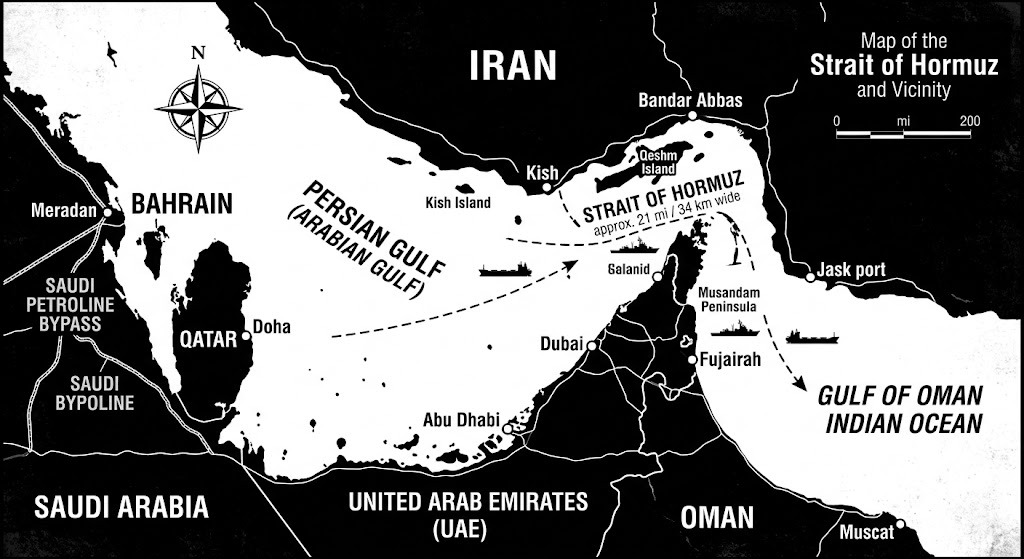
Did you know that there is a tiny, 21-mile-wide stretch of water that basically holds the remote control for your local gas station prices and even the cost of the bread in your pantry? It sounds like something out of a spy thriller, but the Strait of Hormuz is very real, and right now, it is the most talked-about piece of ocean on the planet.
If you look at a map, it’s this narrow “choke point” tucked between Iran and Oman. It connects the Persian Gulf to the rest of the world’s oceans. You might be wondering, why does this one little strip of blue matter so much? Well, let’s break it down: about 20% of the entire world’s oil and a massive chunk of liquefied natural gas (LNG) pass through here every single day. When things get heated in the Middle East, this waterway becomes the ultimate “on-off switch” for the global economy.
The Pulse of the Planet: How It Will Effect to the World Economy
What is the real danger when we talk about how it will effect to the world economy? Think of the Strait as a giant artery. If it gets blocked, the “blood” (which is the oil and gas our modern world runs on) stops flowing. In the middle of a war, the impact isn’t just a tiny bump in prices; it’s more like a seismic shift.
When tankers can’t get through because of mines or the threat of missiles, the immediate reaction is panic in the stock markets. We’ve seen oil prices jump from $70 to over $100 a barrel in just a matter of days. But it’s not just about filling up your car. Think about the fertilizers used by farmers or the plastic used in everything from medical supplies to toys. Most of these come from petroleum products. If the Strait stays closed or even “effectively closed” because insurance companies refuse to cover the ships, the cost of living everywhere—from New York to New Delhi—starts to skyrocket.
The Chessboard: How It Works for Power Politics.
Beyond the dollars and cents, the Strait is the ultimate “Queen” on the geopolitical chessboard. To understand how it works for power politics, you have to see it as more than just a shipping lane; it’s a leverage tool. During a conflict, whoever has the most influence over these waters can essentially hold the world’s biggest economies hostage.
Iran has historically used the threat of closing the Strait as a “shield.” They know that the U.S., China, and Europe are all deeply dependent on that oil. By signaling that they could lay mines or attack tankers, they force the rest of the world to pay attention. On the flip side, the U.S. and its allies use their massive naval presence to ensure “freedom of navigation.” It’s a constant game of cat and mouse where a single wrong move—a drone strike on a tanker or a naval skirmish—can trigger a global crisis. It’s power politics in its rawest form: using geography to dictate global diplomacy.
The Aftermath: Who Will Maintain the Control the Hormuz After the War
This leads us to the big question everyone is whispering about: who will maintain the control the Hormuz after the war? Wars eventually end, but the power vacuum they leave behind is where things get really interesting. Typically, the U.S. Navy has been the “policeman” of these waters, but the landscape is shifting.
We might see a future where a coalition of countries—perhaps including regional powers like Saudi Arabia and the UAE, alongside international players like China—tries to create a new security framework. Since China is the biggest customer for the oil flowing through the Strait, they have a massive stake in making sure the tap stays open. Will we see a joint international task force? Or will one dominant power step in to fill the shoes of whoever was there before? The answer will define the next century of energy security.
What do you think? Is it possible for such a small stretch of water to stay “neutral” in a world that is so hungry for power, or are we destined to keep seeing these “choke point” dramas unfold? It’s a wild thought that our morning commute or the price of our groceries depends so heavily on a few miles of water half a world away.
When the Strait of Hormuz is blocked, the world doesn’t just stop; it frantically looks for a “plan B.” While the Strait is the heavy lifter, carrying roughly 20 million barrels per day (bpd), there are a few “back doors” that countries use to keep at least some oil flowing.
Important Alternative Routes.
Let’s break down the most important alternative routes:
1. The Saudi “East-West” Pipeline
This is the big one. Formally known as the Petroline, it stretches about 750 miles across Saudi Arabia, from the oil fields in the east to the port of Yanbu on the Red Sea.
- Capacity: As of March 2026, it has been pushed to its absolute limit of 7 million bpd.
- Why it matters: It completely bypasses the Persian Gulf, allowing Saudi oil to reach Europe and the Americas without ever nearing Iranian waters.
2. The Abu Dhabi Crude Oil Pipeline (ADCOP)
The UAE has its own escape hatch called the Habshan-Fujairah pipeline. It carries oil from Abu Dhabi’s onshore fields directly to the port of Fujairah on the Gulf of Oman.
- Capacity: It handles about 1.5 to 1.8 million bpd (Barrels per day)
- Why it matters: Because Fujairah is located outside the Strait, tankers can load up there and head straight into the Indian Ocean, totally skipping the “choke point.”
3. The Northern Routes (Iraq and Iran)
- Iraq-Turkey Pipeline: Iraq often tries to send oil north from Kirkuk to the Turkish port of Ceyhan on the Mediterranean. However, political disputes and the 2026 conflict have made this route unreliable, often handling less than 500,000 bpd.
- Goreh-Jask Pipeline (Iran): Iran built its own bypass to the port of Jask, but it hasn’t reached its full 1 million bpd potential yet due to technical hurdles and sanctions.
The catch? All these alternatives combined only handle about 9–10 million bpd—leaving half of the usual supply stranded. It’s a vital safety net, but it’s not a replacement for the real thing.
What are the most effected countries if Hormuz was closed?
When pipelines hit their maximum capacity, the “energy emergency” shifts from a global headache to a localized crisis for a specific group of neighbors. Since about 80–90% of the oil leaving the Persian Gulf is headed east, Asian economies are the ones left standing in the rain.
China and India are the two biggest names on this list. China is the world’s top oil importer, and while they have pipelines from Russia to lean on, those can’t replace the sheer volume they usually get through the Strait. India is in an even tighter spot; they rely on the Middle East for over half of their oil. When the bypass pipelines max out, Indian refineries are often forced to cut production, which can send local fuel and fertilizer prices through the roof.
Then you have Japan and South Korea. These countries are like the “island states” of energy; they have almost no domestic oil and rely on tankers for nearly 90% of their fossil fuels. While they have deep “strategic reserves” (tanks filled with enough oil to last months), they are hyper-vulnerable to the price spikes that happen the second those pipelines are full.
Lastly, don’t forget smaller developing nations like Thailand or Pakistan. They don’t have the massive cash reserves of China or Japan, so when they have to compete for the limited “pipeline-safe” oil, they often get outbid, leading to immediate power shortages and economic strain.
Leave a Reply