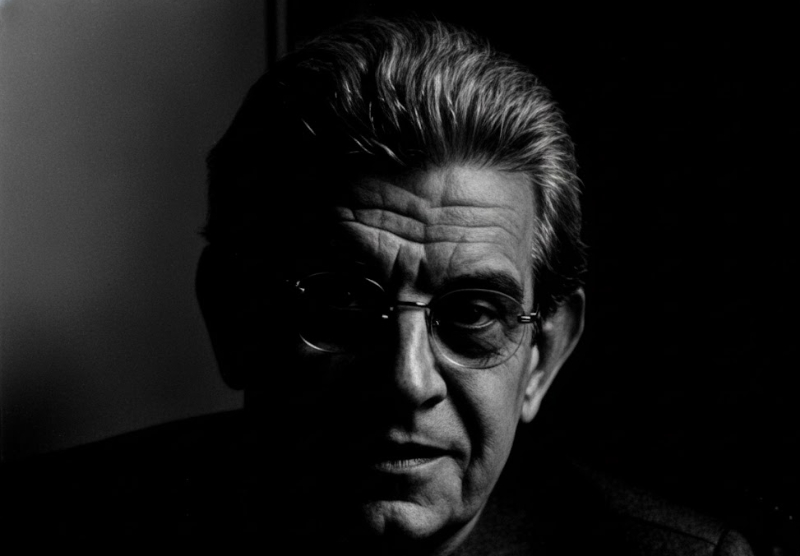
Did you know that the secret to why we keep buying things we don’t need might actually be hidden in the complex theories of a French psychoanalyst and a German philosopher?
What if I told you that the feeling of “never having enough” isn’t just a personal flaw, but a core feature of the world we live in?
Today, let’s talk about Jacques Lacan and Karl Marx. It sounds heavy, but it’s actually a fascinating look at how our minds and our money work together.
The Strange Connection of Jacques Lacan.
Have you ever wondered why we feel a rush when we buy a new phone, only to feel “meh” about it a week later? Jacques Lacan, a famous psychoanalyst, spent a lot of time thinking about this.
In the late 1960s,Jacques Lacan started looking closely at Marx’s ideas. Now, Marx is famous for talking about “surplus value”—that extra profit a boss makes from a worker’s hard labor.
Lacan took that idea and applied it to our feelings. He called it “surplus-jouissance,” which is a fancy way of saying “extra enjoyment” or “extra desire.”
Is There a Solution?
What do you think? Can a new government or a better economy make us perfectly happy? Many people who followed Marx and Freud thought so. They believed that if we fixed society and broke down capitalism, we would finally be mentally free and happy.
But Lacan totally disagreed. He famously said he didn’t have a “solution” to offer. He believed that human desire is naturally “broken” or incomplete.
In his view, no matter what system we live under—socialism, capitalism, or anything else—we will always feel a sense of “crisis and delay.”
The Never-Ending Loop
What is “crisis and delay” exactly? It’s the idea that our satisfaction is always being pushed into the future.
Think about it: you want a specific pair of shoes. You tell yourself, “If I get those, I’ll be happy.” You buy them, you feel great for an hour, and then… you start wanting something else.
Lacan says that’s because we aren’t actually looking for the shoes; we are looking for a feeling of “wholeness” that doesn’t actually exist.
Capitalism is like a pro at using this. It sells us “surplus enjoyment.” It promises that the next purchase will finally make us complete, but it knows it won’t. If we were ever truly satisfied, we’d stop buying things!
The Trouble with Revolution
Did you know that Jacques Lacan wasn’t exactly a typical “revolutionary”? During the famous student protests in Paris in 1968, he was actually quite skeptical.
He told the students that they were acting like “hysterics.” Now, in psychoanalysis, a “hysteric” is someone who challenges the person in power but secretly just wants a better, “new” master to follow.
He thought the “revolution” was just like a planet orbiting a star—it moves in a circle and ends up right back where it started.
He feared that instead of destroying capitalism, these protests were just helping capitalism evolve into a new version based on the “market of knowledge.”
The “Vampire” of Capital
When we look at Marx through Lacan’s eyes, things get a bit spooky. Marx often used “Gothic” metaphors, describing capital as a “vampire” that sucks the life out of living labor.
But Jacques Lacan didn’t want us to see this as a simple hero-versus-villain story. He wanted us to see the internal logic of it.
Capitalism needs workers to create value, but it also needs to take that value away to survive. This creates a huge contradiction.
This contradiction isn’t just about money; it creates a specific kind of “subject” or person. We become people defined by what we lack.
The Truth as a “Symptom”
What is a “political subject” then? To Jacques Lacan and Marx, it’s not just a person with a political opinion.
Marx saw the “proletariat” (the working class) as a “symptom” of society. A symptom in a doctor’s office tells you something is wrong deep inside the body.
The working class is the “symptom” of capitalism because their very existence proves that the system’s promise of “freedom and equality for all” is a bit of a lie.
They represent the truth that the system hides: that for some to be very rich, others must be kept in a state of constant needing.
The “Magic” of Products
Have you heard of “commodity fetishism”? It’s a complex term for a simple idea: we treat objects like they have magical powers.
We look at a designer bag and see “status” or “success” instead of just leather and stitching.
Capitalism covers up the messy, sometimes painful reality of how things are made with a shiny, positive mask. It makes the world look like a “Gospel” of progress.
But Jacques Lacan reminds us that underneath that mask is the same old human desire that can never be fully satisfied.
Why This Still Matters
So, why does any of this matter today? Well, it helps us understand why changing the world is so hard.
It’s not just about changing laws or leaders; it’s about understanding the “brokenness” inside our own hearts and minds.
Lacan’s ideas are a bit of a reality check. They tell us that “perfect mental liberation” is a myth.
Our imperfections and our constant searching are actually what make us human. Our “incompleteness” is the very thing that keeps us moving, dreaming, and even fighting for change.
What do you think? Does knowing that your “thirst” for more is a built-in part of being human make you feel more frustrated, or does it actually make you feel a little more at peace with yourself?
Would you like me to explain more about Lacan’s specific idea of “The Big Other” and how it relates to social media today?
Tharidu Mendis.
Leave a Reply