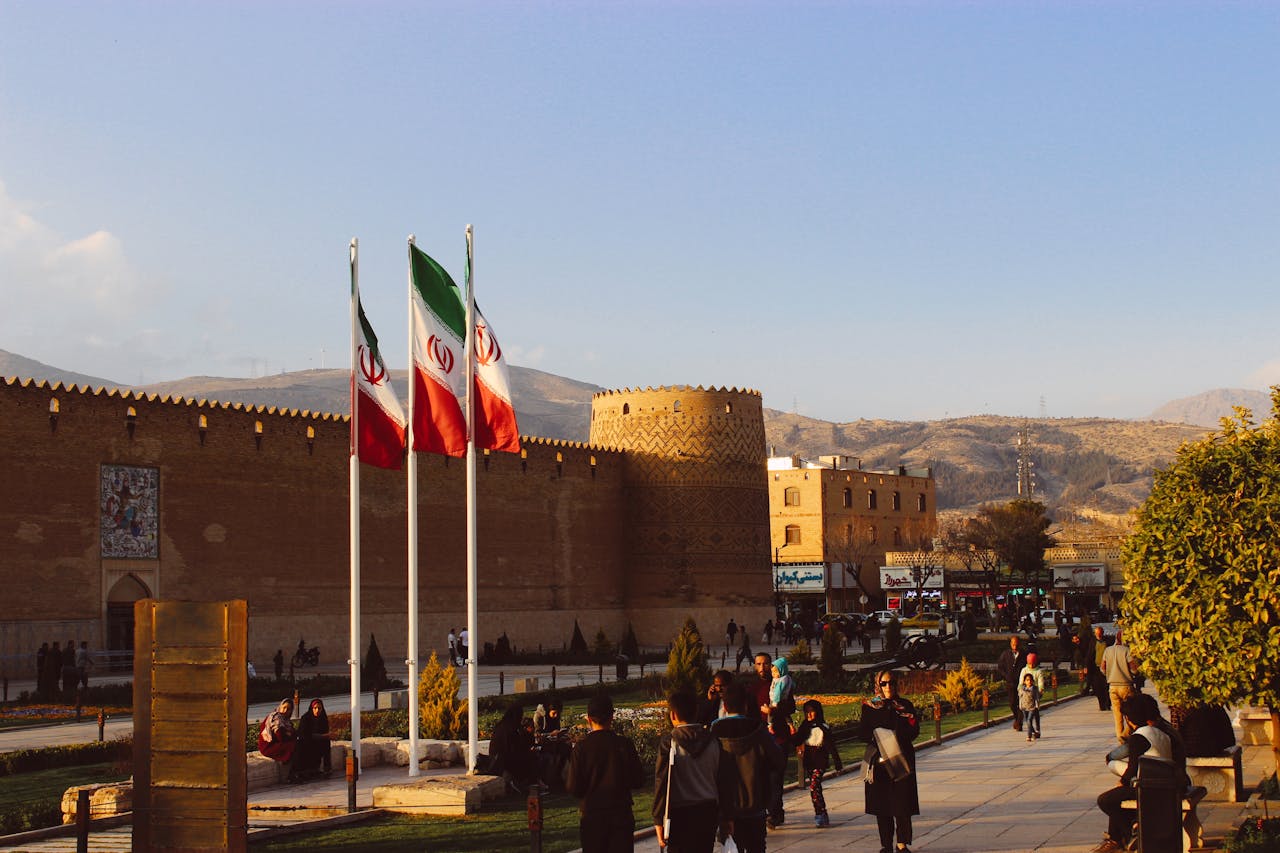
Iran History Transformation: Have you ever looked at a map and wondered how one of the oldest civilisations on Earth transformed from a sprawling empire of silk and poetry into a modern energy powerhouse? It is a wild story filled with royal drama, secret oil deals, and a complete makeover of a nation that changed the world’s balance of power.
Qajar Dynasty.
To understand where Iran is today, we have to look back at a time when things were falling apart. Before the glitz and glamour of the mid-20th century, there was the Qajar Dynasty. They had ruled for a long time, but by the early 1900s, they were struggling to keep the lights on.
The country was essentially being pulled in two different directions by outside powers. You had the British on one side and the Russians on the other, both treating the region like a giant chessboard. The Qajar kings were often more interested in their own luxury than in building roads or schools.
This brings us to a huge turning point in history: how fell down Qajar Dynasty. It wasn’t just one single event, but rather a slow crumble. The central government had lost control over the local tribes, the economy was in shambles, and the people were tired of feeling like their country was being sold off piece by piece.
Imagine living in a place where your leaders are trading away your natural resources just to fund their vacations to Europe. That was the reality for many Persians at the time. The frustration grew until it reached a boiling point, leading to a massive constitutional revolution that tried to limit the King’s power.
But even with a new constitution, the country was still incredibly weak. It was into this vacuum of power that a soldier named Reza Khan stepped. He wasn’t royalty by birth; he was a tough, disciplined officer in the Persian Cossack Brigade who saw his country falling into chaos and decided to do something about it.
Palave Shah Family.
Reza Khan led a coup in 1921, which was the first real step in how Palave Shah family came to power. He didn’t become King right away, though. He started as the Minister of War and then became Prime Minister, proving to everyone that he was the only person capable of bringing order to the mess.
By 1925, the last Qajar Shah was officially deposed, and Reza Khan was crowned as Reza Shah Pahlavi. This was the start of a brand-new era. He wanted to turn Iran into a modern, secular state that could stand on its own feet without being bullied by the British or the Russians.
He changed the country’s name from Persia to Iran internationally to signal a fresh start and a connection to the ancient Aryan roots of the people. He built the Trans-Iranian Railway, established a national bank, and even changed how people dressed to make the country look more like Europe.
But while Reza Shah was busy building the foundation of a modern nation, something else was bubbling beneath the surface—literally. This is the part of the story that explains how Iran became an oil giant. It all started with a guy named William Knox D’Arcy, an Englishman who got a massive concession to look for oil.
For years, they found nothing and were about to give up. Then, in 1908, they hit a massive gusher in a place called Masjed Soleyman. Suddenly, the British government realised that this part of the world was sitting on a liquid gold mine that could fuel their entire navy.
The relationship between Iran and its oil was complicated from the start. The British-owned Anglo-Persian Oil Company was making a fortune, but very little of that money was actually staying in Iran. This created a lot of tension that would define the next several decades of Iranian politics.
When World War II hit, Reza Shah’s desire to stay neutral didn’t sit well with the Allies. They worried he was too friendly with Germany, so they forced him to abdicate and put his young son, Mohammad Reza Pahlavi, on the throne. This transition is another key chapter in how Palave Shah family came to power.
The young Shah was very different from his father. He was more westernized and leaned heavily on the support of the United States and Britain. Under his rule, the oil industry became the absolute engine of the Iranian economy, which is truly how Iran became an oil giant.
White Revolution.
By the 1960s and 70s, Iran was experiencing a massive boom. The Shah launched what he called the White Revolution, which was a series of ambitious reforms aimed at redistributing land to peasants, improving literacy, and giving women the right to vote. It was a time of incredible wealth.
Tehran became a cosmopolitan city known as the “Paris of the Middle East.” If you walked down the streets back then, you’d see high-end fashion, modern architecture, and a booming middle class. The oil money was flowing in faster than the country could even spend it.
However, rapid change always comes with friction. While the cities were modernizing, many people in the more traditional and religious rural areas felt left behind or offended by the Western influence. The gap between the ultra-rich and the poor started to grow wider and wider.
The Shah’s government also became increasingly autocratic. He used a secret police force called the SAVAK to crack down on any political dissent. Whether you were a communist or a religious conservative, if you spoke out against the Shah, you were in big trouble.
The 1979 Islamic Revolution and Iran’s Historical Transformation
This brings us back to the recurring theme of how the Qajar Dynasty—history has a funny way of repeating itself when a government loses touch with its people. Even though the Pahlavis had brought immense wealth and modernisation, the social and political pressure was building up again.
By the late 1970s, the resentment reached a breaking point. A massive coalition of students, workers, and religious leaders joined forces to protest the Shah’s rule. This led to the 1979 Islamic Revolution, which completely changed the direction of the country once more.
The Shah left the country, and Ayatollah Khomeini returned from exile to establish the Islamic Republic. It was the end of the Pahlavi dynasty and the end of the monarchy in Iran altogether. The world watched in shock as one of its most stable-looking allies transformed overnight.
When we look back at this long timeline, it’s amazing to see the resilience of the Iranian people. They went from the decay of the Qajars to the intense modernization of the Pahlavis, all while navigating the complexities of becoming a global energy superpower.
The story of Iran isn’t just about kings and oil; it’s about a culture that has survived for thousands of years, constantly reinventing itself. It makes you wonder, given how much has changed in just the last century, what will the next hundred years look like for this fascinating part of the world?
What do you think is the most important lesson a country can learn from such a rapid and dramatic transformation?
Leave a Reply